Best Air Compressors for a Garage or Shop
Last reviewed October 31, 2026. Prices were listed by the retailer as of Oct 30, 2026 and can change. Confirm the current price and availability on the retailer's page before you buy.
You pull the hose across the garage floor, clip on an impact wrench, and squeeze the trigger. The first few seconds feel great. Then the pump starts hammering, the tank pressure sags, and the wrench slows to a lazy tap while you wait for the compressor to catch up. That gap between what a tool demands and what the compressor can keep delivering is the whole problem with this category. An air compressor does not do the work itself. It stores and supplies air, and every tool you connect is a hungry customer for it.
That is why a few specifications matter more than the sticker price. Tank size, measured in gallons, is the reserve of stored air. A small tank is fine for inflating tires or firing a few brad nails, because those jobs use air in short bursts. Tools that run continuously, such as sanders or grinders, empty a small tank fast. PSI is the pressure the system can reach and hold. CFM, cubic feet per minute, is how much air the pump actually delivers over time, and it is the number that tells you whether a tool can be kept running. Compressors are also described as single stage or two stage. In general terms, a single stage unit compresses air in one step, while a two stage unit compresses it twice, which is usually associated with higher pressures and heavier duty. Power source is the last big decision: electric models plug in, gas models run an engine.
Most listings leave out key figures such as CFM, so you will often have to confirm them on the product page before buying. The three picks below show how far apart a small portable unit and a large shop machine can be.
How to choose
Tank size in gallons
Tank size is stored air. Small tanks, like the 2.5 gal pancake unit in the picks, suit short bursts such as inflating or light nailing. A larger tank, such as the 80 gal and 120 gal models listed, gives you more air before the pump must run again. Match the tank to how long your tool runs at a stretch.
CFM against your tool
CFM is the volume of air delivered per minute, and it decides whether a tool keeps running at full speed. A common mistake is shopping by tank size and PSI alone. Check the air requirement of the tool you own, then look for the compressor's CFM on the listing. Many listings here do not state it.
PSI is a ceiling, not a promise
PSI is the maximum pressure the compressor reaches. Most air tools need a modest working pressure, so a high number is not automatically better for you. The DeWalt pick lists 140 psi in its title and the Ingersoll Rand pick lists 175 PSI. Compare that figure with what your tools ask for.
Single stage or two stage
A single stage compressor compresses air once; a two stage compresses it twice. Two stage designs are generally aimed at heavier, longer duty. The Husky pick is listed as single stage and the Ingersoll Rand pick as two stage. If you only run tools in short bursts, you may not need the extra complexity.
Voltage and electrical supply
Larger compressors need more than a standard outlet. The Husky pick lists 230 V and 22 A, and the Ingersoll Rand pick lists 200 V and 3-phase in its title. Before you buy, confirm that your garage or shop has the matching circuit. Skipping this step is a costly and common mistake.
Skip it if...
- Skip the 120 gal Ingersoll Rand unit if your building lacks 3-phase power, since the listing is for a 200-volt 3-phase machine priced at $10,609.99.
- Skip the 2.5 gal DeWalt pancake model if you plan to run air tools continuously, because a small tank is built for short bursts like inflating and light nailing.
- Skip the Husky 80 gal unit if you only have a standard household outlet, because it is listed at 230 V and 22 A.
- Skip any listing that does not state CFM if your tool has a firm air requirement, until you have confirmed the figure elsewhere.
Our picks from the catalog
These picks come from what the listings state: prices, specifications and kit contents. Each says which listed facts it is based on.

Husky 80 Gal. 3-Cylinder Single Stage Electric Air Compressor
$2,174.62 · Voltage: 230 V · Size / capacity: 80 gal · Motor current: 22 A
The Husky C801H is the value pick because it carries the most listed specifications for its price while landing inside the middle half of prices in this group, at $2,174.62. It is listed as an 80 gal, 3-cylinder, single stage electric unit at 230 V and 22 A. Also confirm you have a 230 V supply.
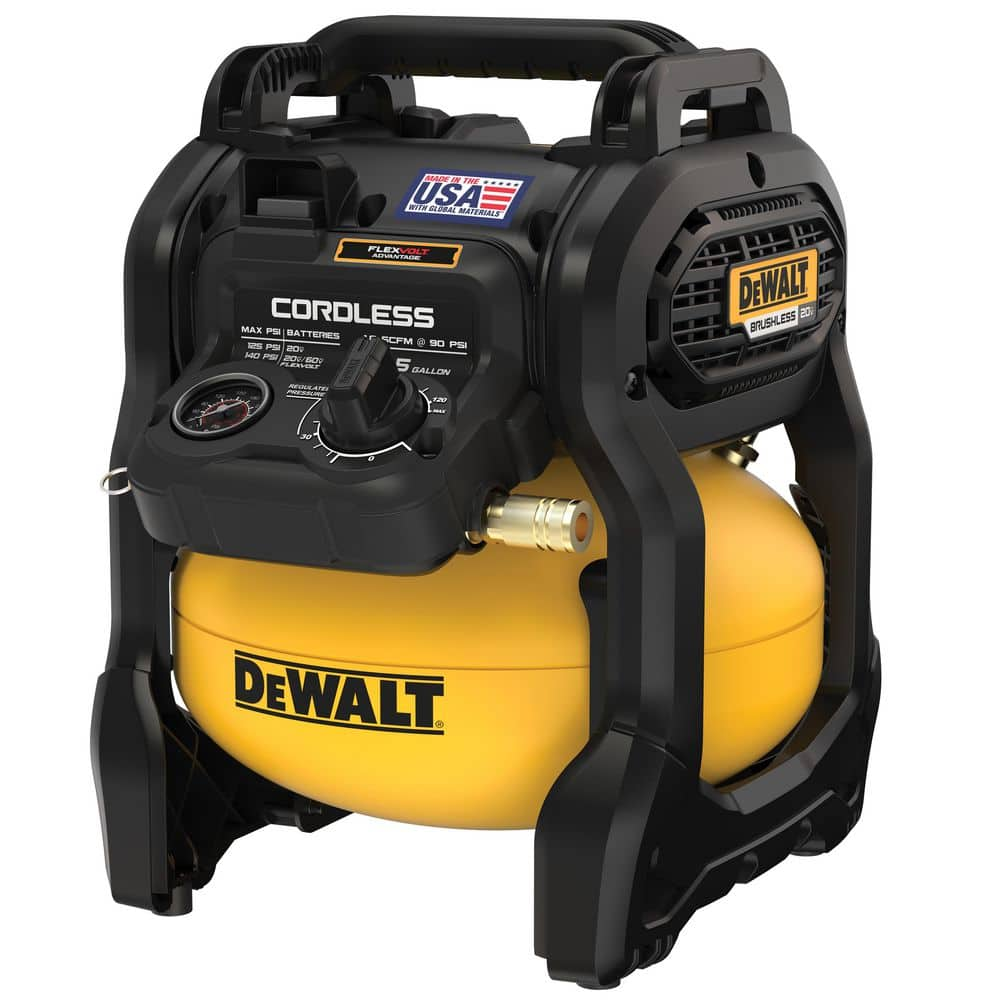
DeWalt 2.5 Gal. 140 psi Portable Electric Pancake Air Compressor
$239.00 · Size / capacity: 2.5 gal · Weight: 21.5 lb
The DeWalt DXCM2520B is the budget pick because it has the lowest price, $239.00, among the 49 models whose listings state at least two specifications. It is a 2.5 gal, 140 psi portable electric pancake compressor weighing 21.5 lb. That makes it a sensible fit for inflating and light nailing. Keep in mind that the listing does not state CFM or what is in the box, so check both before relying on it for heavier tools.
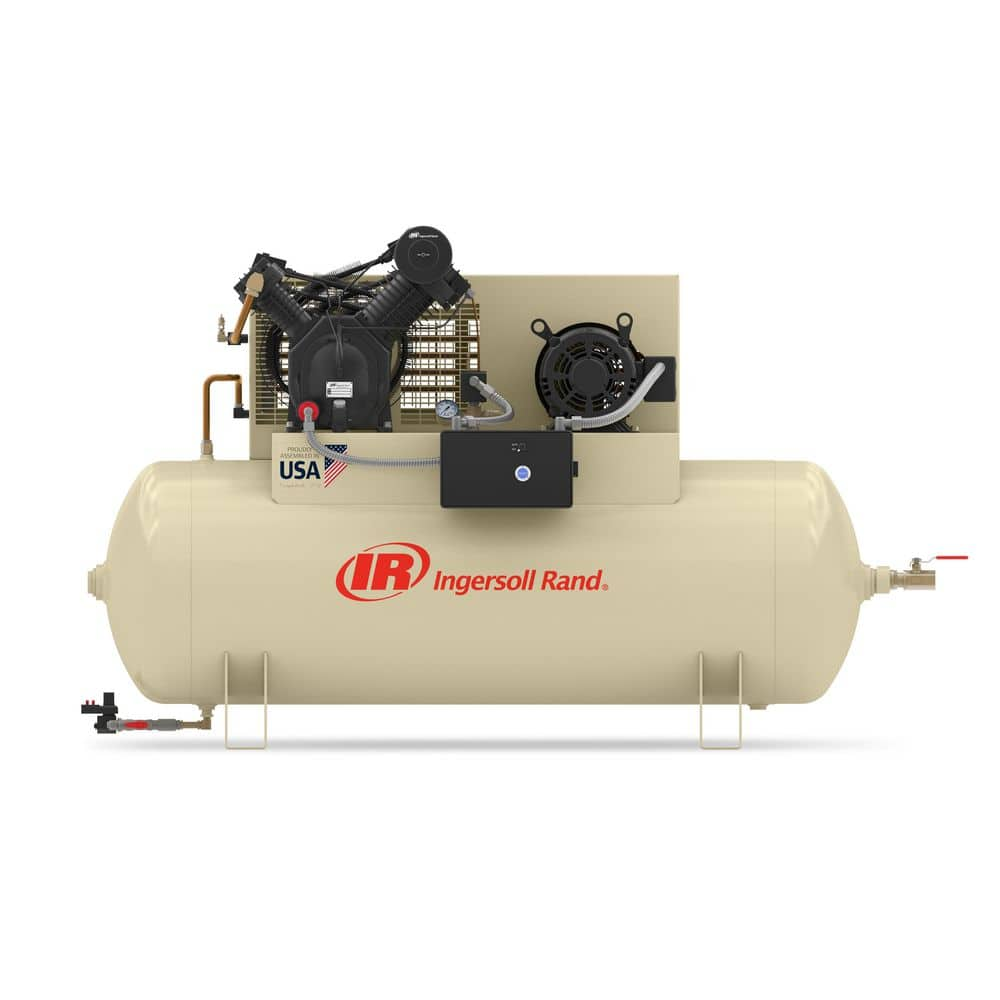
Ingersoll Rand 120 Gal. 175 PSI Type 30 Horizontal 15 HP 200-Volt 3-Phase 2 Stage Electric Air Compressor Premium Pkg
$10,609.99 · Voltage: 200 V · Size / capacity: 120 gal
The Ingersoll Rand 45466208 is the heavy-use pick because it has the highest listed tank size in this group, 120 gal. The title describes it as a 175 PSI, 15 HP, two stage electric unit running on 200-volt 3-phase power, priced at $10,609.99. That electrical requirement is the thing to keep in mind: many home garages do not have 3-phase service. The listing also does not state its configuration or included items.
Buying checklist
- Find the CFM your air tool needs and compare it with the compressor.
- Choose a tank size that fits short bursts or continuous running.
- Confirm the working PSI covers your tools.
- Decide between single stage and two stage.
- Check the voltage and amperage against your outlet or circuit.
- Confirm whether the unit is electric or gas.
- Read what is in the box, since many listings do not state it.
- Check weight if you need to carry it, such as the 21.5 lb DeWalt.
Frequently asked questions
How many air compressors are listed?
The catalog lists 128 air compressor models. The brands with the most listings are Ingersoll Rand with 40, DeWalt with 25, California Air Tools with 19, EMAX with 12, VIAIR with 12 and Campbell Hausfeld with 10. All are listed under the same product type, air compressor.
What is the price range?
The three picks sit well apart within that span: $239.00 for the DeWalt budget pick, $2,174.62 for the Husky value pick and $10,609.99 for the Ingersoll Rand heavy-use pick.
What do the configurations mean?
Configuration describes what you receive. A bare tool is listed as the tool only. Because most listings do not say, check the product page for what is included.
Are there cordless air compressors?
Yes. The catalog shows 16 cordless models, and 25 percent of the listings are noted as brushless. A platform means a shared battery system; the catalog shows 4 models on the M18 platform. None of the three picks here are listed as cordless, so they run on mains power.
What does tank size tell me?
Tank size in gallons is the amount of stored air. The picks span 2.5 gal for the DeWalt, 80 gal for the Husky and 120 gal for the Ingersoll Rand. A bigger tank means more reserve, but it does not by itself state how much air the pump delivers per minute.