Sanders and Polishers: Matching Tool to Surface Prep
Last reviewed October 31, 2026. Prices were listed by the retailer as of Oct 30, 2026 and can change. Confirm the current price and availability on the retailer's page before you buy.
Smoothing a surface looks gentle, but it is hard on a tool in quiet ways. Sanding and polishing keep a motor spinning or oscillating for long stretches, throw fine dust into every vent, and demand steady control, because a tool that grabs or wanders leaves marks that have to be fixed with more sanding. Wood, drywall and painted trim each respond differently, so one tool rarely suits every surface in the same way.
Three specifications do most of the sorting. The first is pad size, meaning the width of the sanding or polishing surface. A larger pad covers more area per pass, which suits broad flat panels, while a smaller pad reaches corners and edges. Among the picks below, the listings state sizes such as 1/4 in., 8 in. and 12 in. The second is power source. Corded tools state motor current in amps, the amount of electric current the motor draws, while cordless tools state battery voltage, which is the electrical pressure the battery supplies. Neither number alone tells you how a particular tool will feel in use, so treat them as a way to compare like with like. The third is orbit type, which describes how the pad moves, for example a dual-action polisher that spins and oscillates at once. Several listings in the catalog do not state this clearly, so check the product page before relying on it.
About 78 percent of listings state a brushless motor, and 45 models are cordless. Most cordless models sit on a battery platform, which is a family of batteries and chargers that work across one maker's tools. The listings here include M12, M18, 20V MAX and LXT 18V, so choosing a sander also means choosing which battery family you will keep buying into.
How to choose
Pad size and surface
Pad size sets how much surface you cover per pass and how well you can reach tight spots. The listings in this group show sizes like 1/4 in. for a sheet sander, 8 in. for a polisher and 12 in. for a benchtop disc sander. Match the pad to the largest surface you work on most often, then check the product page for accessory pad options.
Corded amps or cordless voltage
Corded sanders state motor current in amps, such as 8 A on one listed benchtop model, and they need an outlet. Cordless models state battery voltage, such as 18 V or 40 V, and move freely. These numbers help you compare within one type, but they do not rank a corded tool against a cordless one.
Orbit type and speed
Orbit type describes how the pad moves, and it affects how aggressively a tool removes material and how it leaves a finish. Some listings state a maximum speed, like 5,100 RPM on one polisher, while others state no orbit information. If the product page does not describe the motion, treat that as an open question to answer before buying.
Battery platform and what is in the box
A platform is a battery family shared across one maker's tools. If you already own batteries, a bare tool can save money. Only the listing's in-the-box line tells you whether batteries and a charger are included. Where the listing is silent, assume you are buying the tool alone and confirm on the product page.
Brushless motor
A brushless motor is a motor design that avoids carbon brushes, which are small parts that wear over time. Listings in this group often state it, and 78 percent of models in the catalog do. Treat it as a stated feature to look for, not proof of how any single tool will hold up in your work.
Our picks from the catalog
These picks come from what the listings state: prices, specifications and kit contents. Each says which listed facts it is based on.
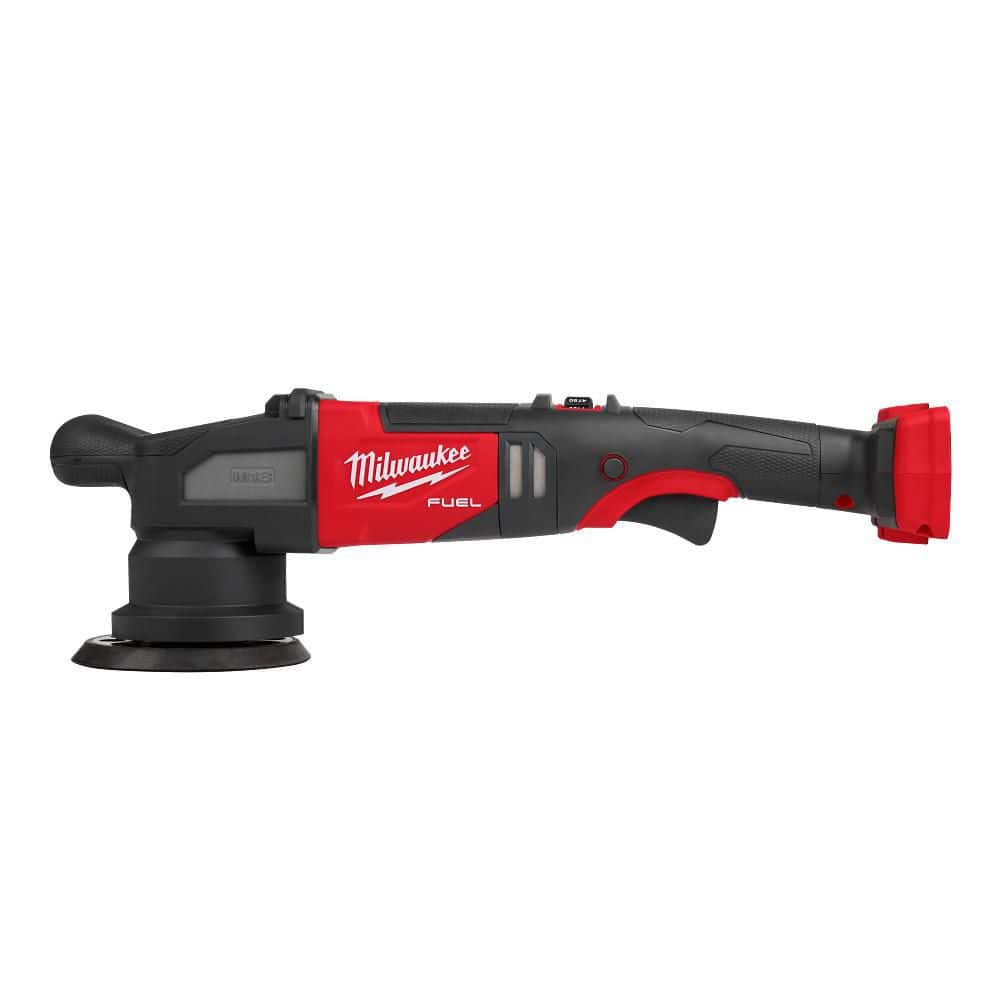
Milwaukee M18 FUEL18V Lithium-Ion Brushless Cordless 15MM DA Polisher (Tool-Only)
$329 to $608 · · Voltage: 18 V · Brushless motor: Yes (stated in the listing) · Battery platform: M18 · Battery capacity: 8 Ah · Max speed: 5,100 RPM
This Milwaukee M18 FUEL 15MM dual-action polisher, model 2684-20, is listed at $329 to $608, inside the middle half of prices in this group, and it has the most listed specifications and kit items for the price. The listing states 18 V, a brushless motor, an 8 Ah battery capacity and 5,100 RPM max speed. Keep in mind that it is titled Tool-Only and configured as a bare tool, while the in-the-box line mentions batteries, a charger and a case, so confirm exactly what ships.

WEN Corded 12 in. Benchtop Disc Sander with Miter Gauge and Dust Collection System
$201.36 · Size / capacity: 12 in. · Motor current: 8 A
The WEN 65812 is a corded 12 in. benchtop disc sander with a miter gauge and dust collection system, listed at $201.36, the lowest price among the 81 models whose listings state at least two specifications. The two stated specs are a 12 in. size and an 8 A motor current.
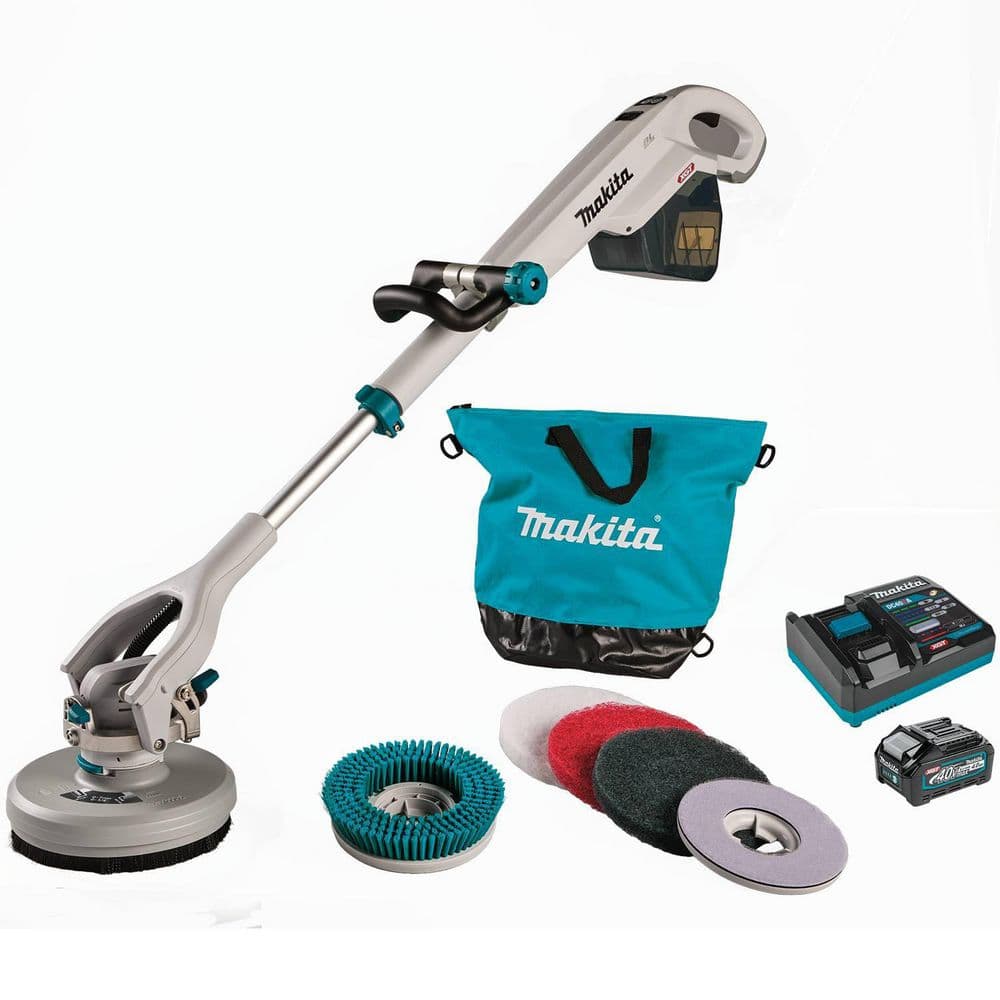
Makita 40V max XGT Brushless Cordless Telescoping 8 in. Polisher / Scrubber Kit, 4. 0Ah
$999.00 · Kit · Voltage: 40 V · Brushless motor: Yes (stated in the listing) · Battery platform: XGT 40V · Size / capacity: 8 in. · Battery capacity: 4 Ah
The Makita GSP01M1 is a 40V max XGT brushless cordless telescoping 8 in. polisher and scrubber kit, listed at $999.00. It has the highest listed battery energy in this group, at 40 V and 4 Ah, and the listing states a brushless motor and the XGT 40V platform.

Milwaukee M18 18V Lithium-Ion Cordless 1/4 in. Sheet Sander with 2.0 Ah Compact Battery
$259 to $349 · Kit · Voltage: 18 V · Battery platform: M18 · Size / capacity: 1/4 in. · Battery capacity: 5 Ah
The Milwaukee M18 1/4 in. sheet sander, model 2649-20-48-11, is listed at $259 to $349 as a kit with a 2.0 Ah compact battery in the title. It has the most complete kit contents stated, and the listing states 1 battery, a charger, and a case or bag. It sits on the M18 platform at 18 V. Keep in mind the specs list shows 5 Ah while the title says 2.0 Ah, so verify the battery before ordering.
Skip it if...
- Skip a bare tool if you do not already own batteries and a charger on the same platform, since the listing sells the tool only unless it states otherwise.
- Skip the corded benchtop disc sander if you need to move between rooms or work away from an outlet, because it is built around a fixed 12 in. disc.
- Skip any listing that does not state its pad size or orbit type if the surface you are finishing depends on one of them.
- Skip a platform you do not want to stay with, since M12, M18, 20V MAX, LXT 18V and XGT 40V batteries are not described as interchangeable.
Buying checklist
- Name the surface and the largest area you need to cover.
- Pick a pad size that fits that area and the edges you must reach.
- Decide between corded amps and cordless voltage.
- Check whether the listing states orbit type and maximum speed.
- Confirm the battery platform if you already own batteries.
- Read the in-the-box line to see if batteries and a charger are included.
- Note whether the listing says brushless.
Frequently asked questions
How many models are in this group?
The catalog lists 116 models in this group, all typed as sanders. Of those, 45 are cordless and about 78 percent state a brushless motor.
What does bare tool mean?
A bare tool is listed as the tool only, without a battery or charger. In this group, 18 models are listed as bare tool, 31 as kit, and 67 do not state a configuration. Check the in-the-box line on the listing before assuming anything extra ships.
What is a battery platform?
A platform is a family of batteries and chargers from one maker that work across that maker's cordless tools. The platforms listed here are M12 with 19 models, M18 with 9, 20V MAX with 5 and LXT 18V with 4. Owning batteries on a platform can make a bare tool a practical choice.
What is the difference between amps and volts?
Amps describe the electrical current a corded motor draws, such as the 8 A stated on the WEN benchtop sander. Volts describe the electrical pressure a cordless battery supplies, such as 18 V or 40 V. They are useful for comparing tools of the same type, not for ranking corded against cordless.
Which brands appear most in this group?
The listings are led by Makita with 30 models and Milwaukee with 28. JET has 18, Grizzly Industrial and Powermatic each have 11, and DeWalt has 6. Brand counts only show how many models are listed, not how any model performs, so compare the stated specifications for the tool you want.