Portable Generators: Power Source and Size Guide
Last reviewed October 31, 2026. Prices were listed by the retailer as of Oct 30, 2026 and can change. Confirm the current price and availability on the retailer's page before you buy.
Before you compare brands or prices, settle one question: what will feed the generator, and what will you plug into it? Fuel type is the power-source decision, and it quietly shapes everything that follows, from where you store the unit to what you keep on hand before a storm. That spread is wide enough that a clear plan matters more than any single feature.
The second decision is wattage, and it comes in two numbers. Running watts is the power a generator can supply continuously. Starting watts, sometimes called surge, is a short burst available when a motor-driven appliance such as a refrigerator, pump or air conditioner kicks on. Motors often draw several times their running load for a moment, so a generator that covers your running total can still struggle at startup. Add up what you want to power at the same time, then check the listing for both figures. Some listings state only one number, which is worth noticing before you buy.
The third decision is inverter versus open frame. In general terms, an inverter generator produces power through electronic conversion, which is often chosen where cleaner electricity matters for sensitive electronics, while a traditional open-frame unit is the simpler, usually larger design. Neither word tells you how a specific model performs, so read the listing for what it actually states. Of the 144 listed models, three are described as cordless and the rest are fuel-driven, so most shoppers will be choosing among fuels, not batteries. Two picks below sit at opposite ends of the size range.
How to choose
Fuel type
Decide this first, because it determines storage, refueling and what you stock ahead of an outage. Gasoline is common among the models in this catalog, but listings differ, so check the title and description for the fuel the unit runs on. If you want a different fuel, filter for it before comparing anything else.
Running and starting watts
Running watts covers steady loads; starting watts covers the brief surge when motors start. List everything you want powered at once, total the running figures, then allow headroom for the largest motor starting. If a listing shows only one wattage figure, confirm what it refers to before treating it as your capacity.
Inverter or open frame
An inverter design is generally associated with cleaner output for sensitive electronics and is often smaller, while open-frame units are the more basic layout. Use the product title to see which design a model claims. A listing that mentions low THD is pointing at output quality, but the figure itself must appear in the listing.
Weight and portability
A generator for an RV or camping trip needs to be carried and loaded, while a job-site or home-backup unit may stay put. Missing weight is a reason to look closer.
Safety features and outlets
Some listings mention a carbon monoxide alert or sensor, and some mention a 50A outlet for larger connections. These are listed features, not promises about results. Match the outlets to the plugs you actually use, and treat any CO feature as an addition to running a generator outdoors, never a substitute.
What is in the box
A kit means a bundle, but the listing must say what it contains. Do not assume fuel, oil, wheels or cords are included unless the listing says so.
Our picks from the catalog
These picks come from what the listings state: prices, specifications and kit contents. Each says which listed facts it is based on.
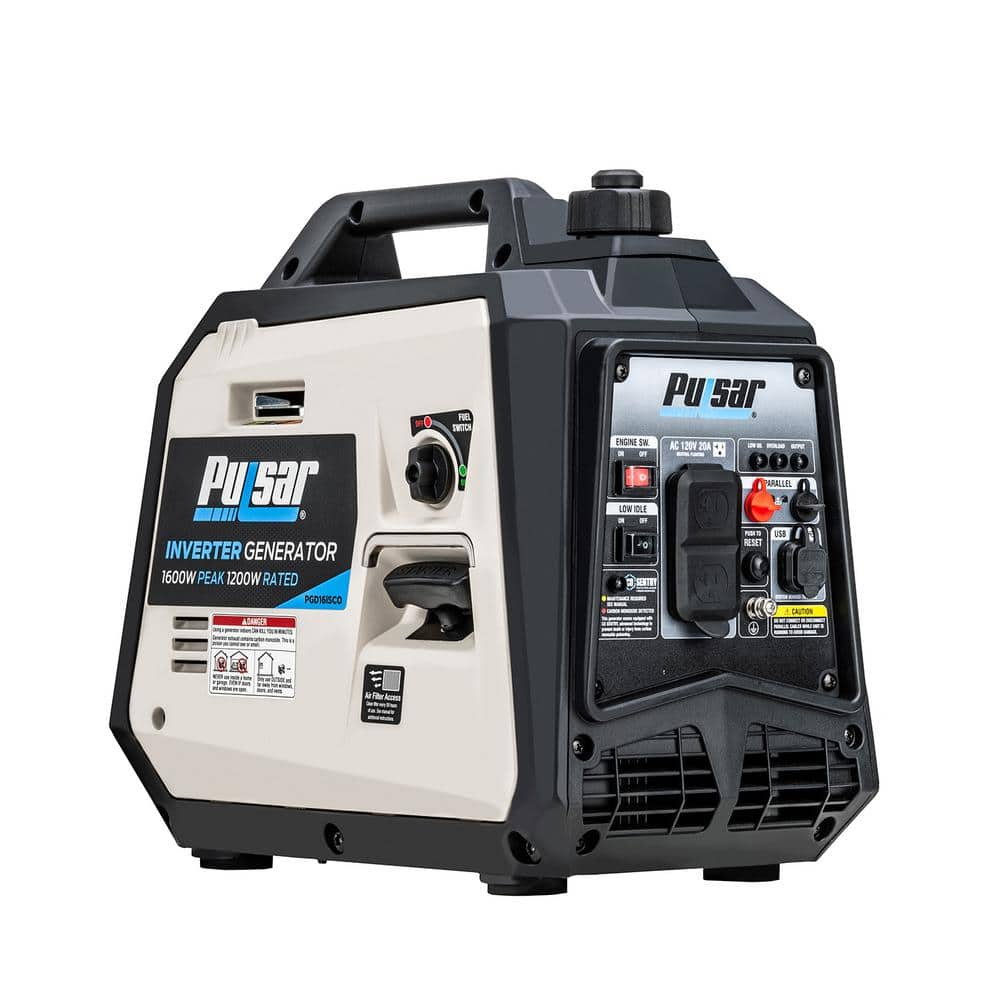
Pulsar 1600-Watt Recoil Start Gasoline Powered Inverter Generator with CO Alert
$299 to $450 · Size / capacity: 1600 W · Weight: 24 lb
This is the Best budget pick because it has the lowest price among the 127 models whose listings state at least one specification, listed at $299 to $450. The listing states 1600 W and a weight of 24 lb, and the title describes a recoil-start gasoline inverter with a CO alert. The 1600 W figure also suits only small loads.

Westinghouse 28,000/20,000-Watt Remote Electric Start Gas Powered Portable Generator with Low THD, 50A Outlet, and CO Sensor
$3,799 to $3,899 · Size / capacity: 28,000 W
This is the Best for heavy use pick because it has the highest listed watts in its group, 28,000 W, and is priced at $3,799 to $3,899. The title describes remote electric start, a gas-powered portable design, low THD, a 50A outlet and a CO sensor, with 20,000 watts also named.
Skip it if...
- Skip the budget pick if you plan to run several appliances at once, since its listing states only 1600 W.
- Skip the 28,000 W model if you only need to charge phones and run a few lights, because you would be paying $3,799 or more for capacity you may never use.
- Skip any listing that does not state both running and starting watts if you need to power motor-driven equipment, until you have confirmed the missing figure.
- Skip a cordless option if you need long, heavy-duty backup, since only three of the 144 listed models are described as cordless.
Buying checklist
- Choose your fuel before anything else.
- List every appliance you want to run at once.
- Total the running watts, then add headroom for starting watts.
- Decide between inverter and open-frame design.
- Check that the outlets match your plugs.
- Look for stated weight if you must carry the unit.
- Read the listing for what is in the box.
- Note any CO alert or sensor, and still run the unit outdoors.
Frequently asked questions
How many portable generators are listed?
The catalog lists 144 generator models. The most common brands are Generac with 23, WEN with 22, Briggs & Stratton with 20, Westinghouse with 20, Champion with 19 and Honda with 13. Counts reflect what is listed, not a ranking of quality.
What is the price range?
That means half the models are priced below roughly that figure. The two picks here sit at the low end, from $299, and in the upper range, from $3,799.
What do running and starting watts mean?
Running watts is the power a generator can supply continuously, while starting watts is a short surge for motor loads. In general, motors need extra power for a moment when they start. Check the listing for both figures, since some state only one.
What does a kit configuration mean?
In this catalog, 30 models are labeled as kits, while 114 do not state a configuration. A kit generally means a bundle, but the contents vary and must be confirmed in the listing. Neither pick here states its configuration or what is in the box.
Are there battery-powered options?
Three of the 144 listed models are described as cordless, and the catalog shows no battery platforms. That means most listings are fuel-driven generators. If you want a battery-based unit, check each listing for its power source and stated capacity before comparing.