Portable Power Stations: Budget to Whole-Home
Last reviewed October 31, 2026. Prices were listed by the retailer as of Oct 30, 2026 and can change. Confirm the current price and availability on the retailer's page before you buy.
Price is the first question most shoppers ask, and in this category it spans a wide range. That gap tells you the market is really several different products sold under one name. At the low end sit compact units meant for a campsite or a few small devices. Higher up, prices climb alongside listed output, and the largest listings are pitched at home backup rather than a weekend trip. Before comparing brands, decide which tier matches your job.
Two numbers do most of the sorting. Watts describe how much power a unit can deliver at one moment, so they decide which devices you can plug in together. Watt-hours describe stored energy, so they decide how long those devices keep running. A 600 W unit can in principle power a 600 W load, but a listing that states 288 Wh describes a small tank of energy; the arithmetic is simply watt-hours divided by the watts you draw. Peak or surge figures, such as the 1500 W peak stated on the budget pick, cover brief startup spikes rather than steady use.
Two other points are worth knowing. Battery chemistry matters because it shapes how a pack ages; LFP is a common abbreviation for lithium iron phosphate, and one pick below names it in its title, though the listing data here does not tell us how any pack lasts. Solar input is the rate at which a unit can accept charging from panels, which matters for multi-day camping or long outages when the wall outlet is not available. In the catalog, 42 models are listed as kits, 7 do not state a configuration, and 2 are bare tools, so always check what is actually in the box before you compare prices.
Our picks from the catalog
These picks come from what the listings state: prices, specifications and kit contents. Each says which listed facts it is based on.
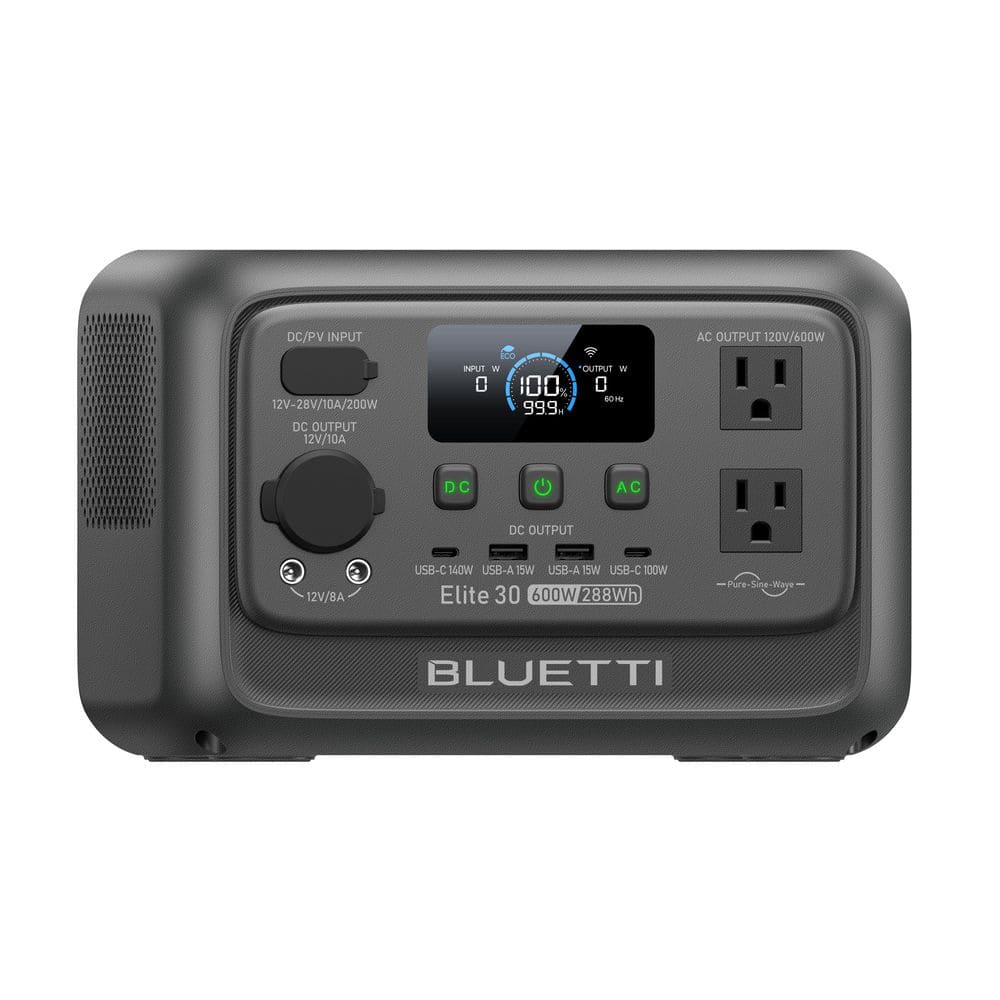
Bluetti 600W Continuous/1500W Peak Output 288Wh Portable Power Station, Push Button Start Battery Solar Generator for Campsite
$279.99 · Kit · Size / capacity: 600 W
Bluetti EL30V2-THDUS earns the budget slot because it is the lowest price among the 46 models whose listings state a specification, at $279.99. The listing gives 600 W continuous, 1500 W peak and 288 Wh, in a kit configuration.
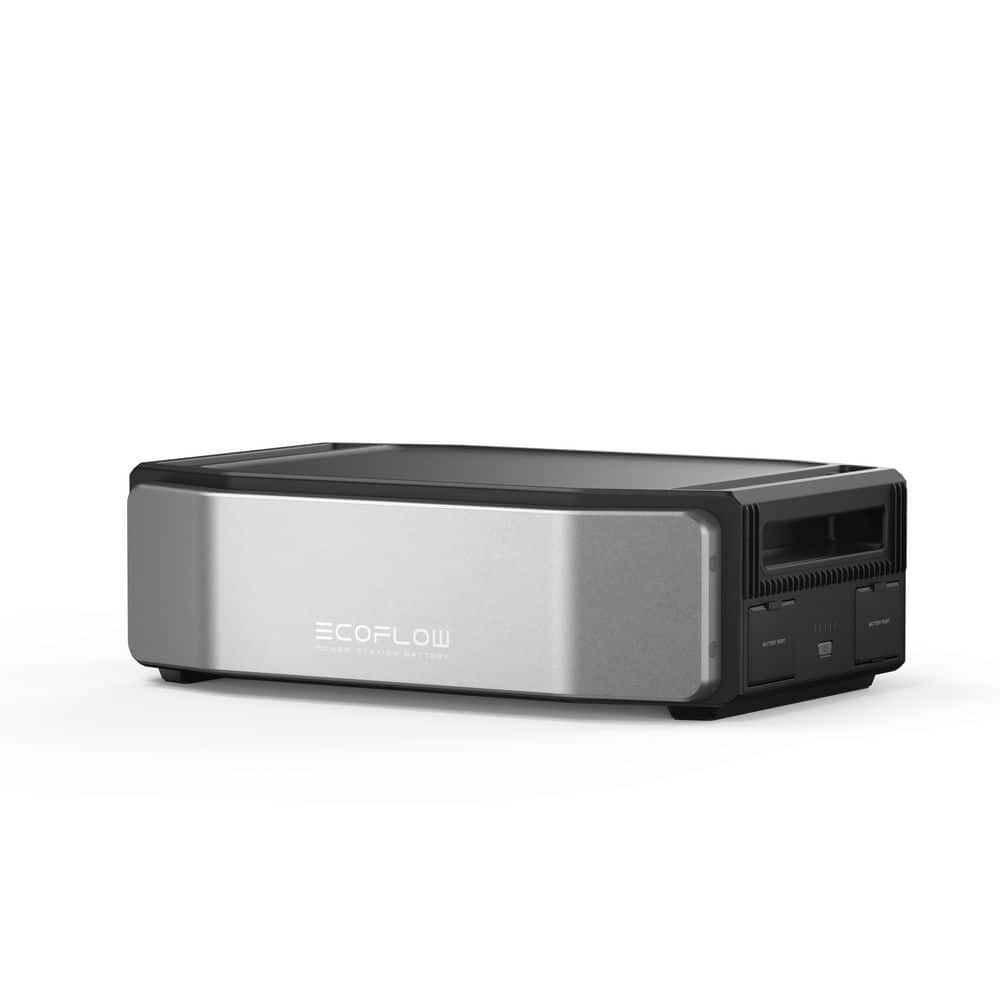
EcoFlow Battery Generator Delta Pro Ultra X Battery Pack 6144Wh Solar Generator, 12000W Output, LFP, Home Backup, Push-Button
$2,399.00 · Kit · Size / capacity: 12000 W
EcoFlow Delta Pro Ultra X Battery Pack (EFDELTAPROUXEB) is picked for heavy use because it carries the highest listed output in this group, 12,000 W, with 6144 Wh stated in the title and LFP named as the chemistry. It lists at $2,399.00 as a kit.
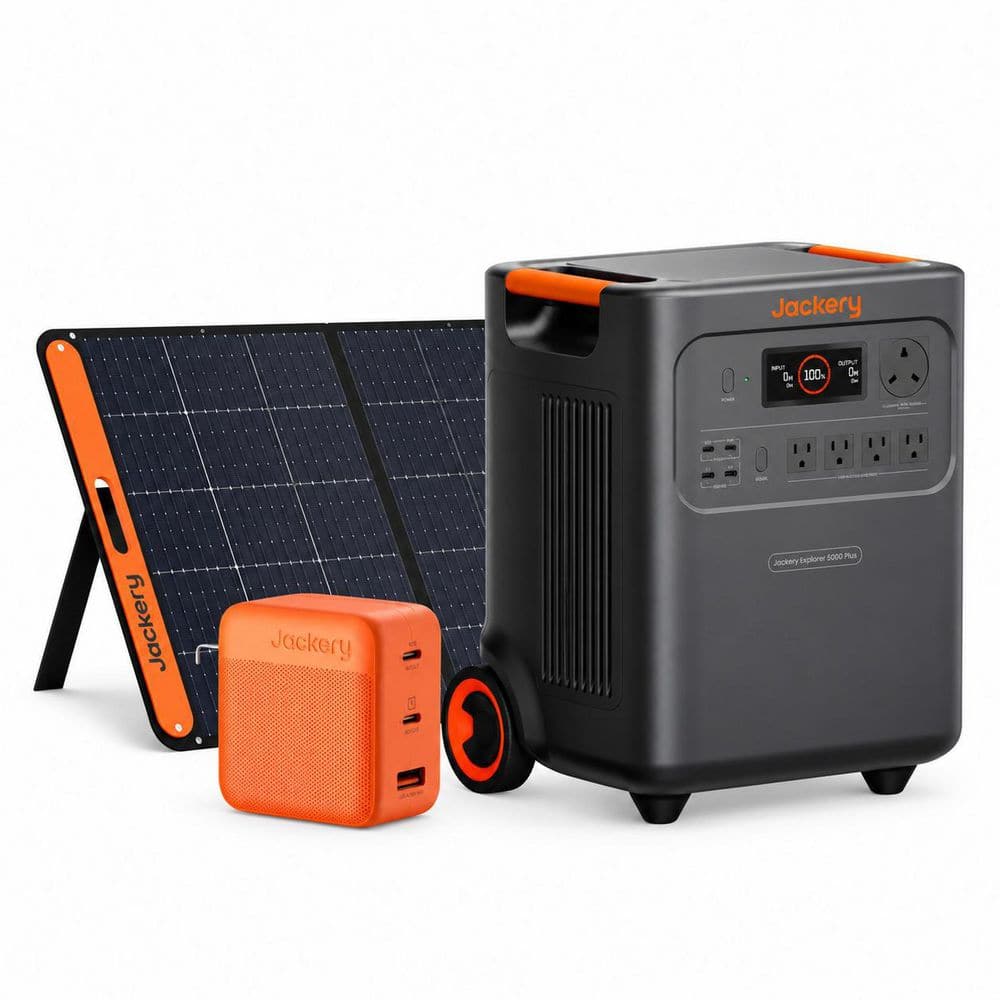
Jackery HomePower 3600 Plus 3600/7200W Portable Power Station, 3584Wh Solar Generator w/500W Panel and 102W Charger
$2,799.00 · Kit · Size / capacity: 3600 W
It lists 3600 W continuous, 7200 W peak and 3584 Wh at $2,799.00. Keep in mind that the in_the_box line names only the charger, so verify the panel separately.
How to choose
Output watts
Add up the running watts of everything you want to power at once, then choose a unit whose listed continuous output sits above that total. Peak or surge numbers only cover short startup spikes. In this guide the picks range from 600 W to 12,000 W, so the first filter is simply how heavy your biggest load is.
Capacity in watt-hours
Watt-hours tell you how long the unit can keep running a load. Divide the stored watt-hours by the watts you draw to estimate runtime in hours. The budget pick lists 288 Wh and the Jackery kit lists 3584 Wh, so the same load would drain them at very different speeds.
Battery chemistry
LFP stands for lithium iron phosphate, a type some makers name in their titles.
Solar input
Solar input is how fast the station can recharge from panels. It matters for long outages, off-grid camping and remote job sites with no outlet.
What is in the box
Packages differ. A kit may add a charger or solar panel, while a bare tool is the unit alone. Do not assume a panel or cable is included unless the listing says so.
Price against your tier
Pick the tier first, then compare within it. Paying for 12,000 W makes little sense if your devices draw a few hundred watts, and a small unit will not cover appliances that need far more output.
Skip it if...
- Skip the $279.99 Bluetti if you need to run large loads for hours, since its listing states 600 W and 288 Wh.
- Skip the EcoFlow Delta Pro Ultra X if your needs are a phone and a light at a campsite; 12,000 W and $2,399.00 are far beyond that job.
- Skip any listing that does not state a configuration if you need a panel or cable included; 7 of the 51 models give none.
- Skip the Jackery kit if you assume everything pictured is included; only a charger is stated in the box.
- Skip a bare tool listing if you need a ready-to-run package, because it is listed as the unit only.
Buying checklist
- Add up the running watts of your devices.
- Check the listed continuous output exceeds that total.
- Note the watt-hours and divide by your load for runtime.
- Confirm the battery chemistry named in the listing.
- Look for a stated solar input figure if you plan to use panels.
- Read the in-the-box line for chargers or panels.
- Compare price within your tier, not across all 51 models.
Frequently asked questions
How many portable power stations are in the catalog?
The catalog lists 51 power station models. By configuration, 42 are listed as kits, 7 do not state a configuration, and 2 are listed as bare tools. Brands include Anker with 16 models, Jackery with 8, Bluetti and EcoFlow with 7 each, Nature's Generator with 6, and Milwaukee with 2.
What is the price range?
The three picks here sit at $279.99, $2,399.00 and $2,799.00, covering a budget unit, the highest listed output in this group, and a kit with a stated charger.
What is the difference between watts and watt-hours?
Watts describe how much power a unit can deliver at one moment, so they limit which devices you can run together. Watt-hours describe stored energy, so they set how long the unit runs. Dividing watt-hours by the watts you draw gives a rough runtime in hours.
What does a kit configuration mean here?
In this catalog, a kit means the listing is a package rather than a bare tool. A bare tool is listed as the unit alone. Only the Jackery pick states its box contents, a charger, so check each listing for what a kit actually includes.
Is a battery platform relevant to these power stations?
Not in this catalog. No battery platforms are listed for the 51 models. A platform usually means a battery system shared across cordless tools, but these power stations are standalone units, so you do not need to match a platform when choosing.